Waterproofing is a complete wet-area system
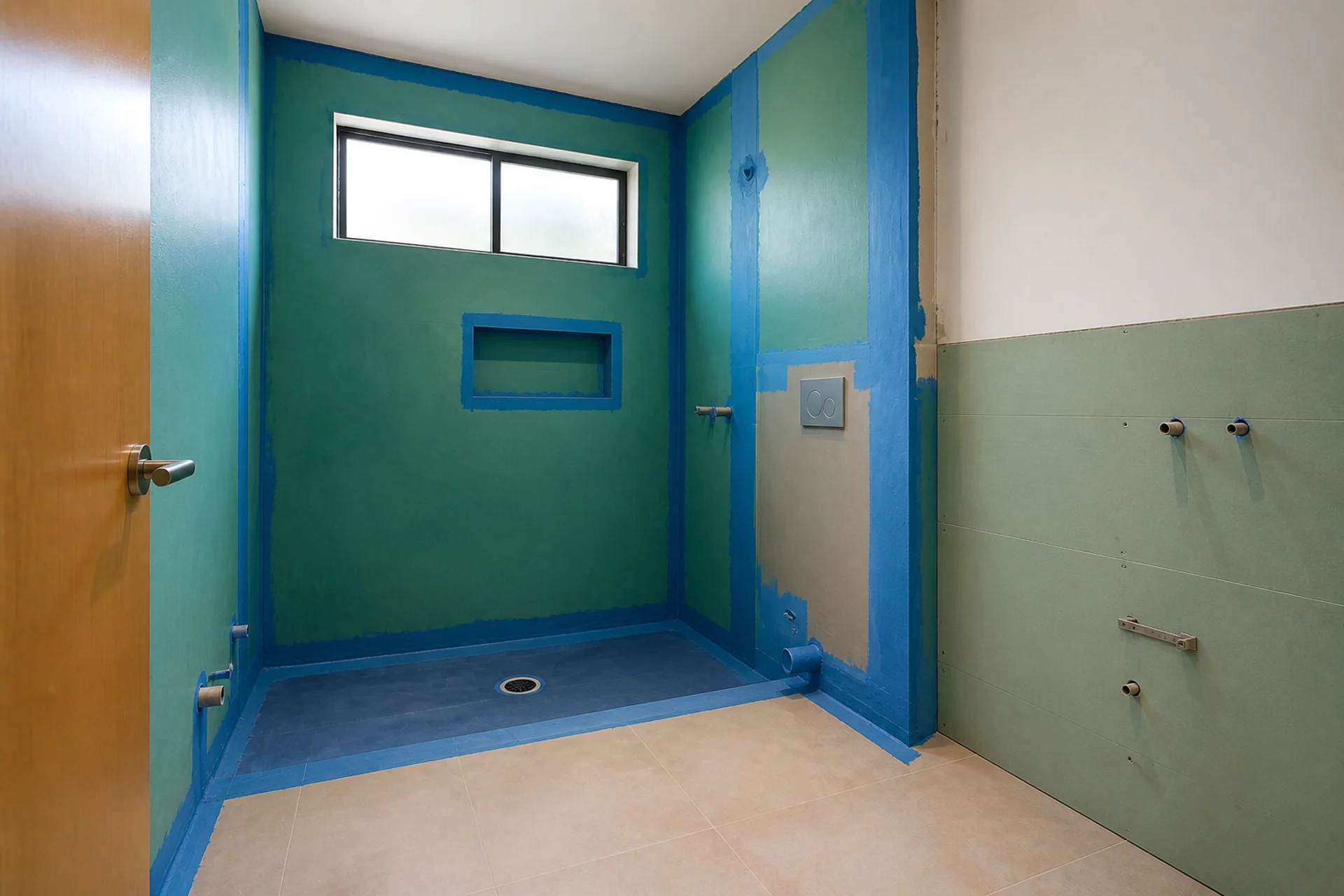
Waterproofing is not simply a visible coating beneath tiles. The outcome depends on the substrate, junctions, penetrations, shower configuration, drainage, falls, compatible materials and the way later trades protect the completed membrane.
The National Construction Code sets performance and Deemed-to-Satisfy requirements for wet areas in houses. The current NCC guidance identifies relevant requirements in Volume Two and Part 10.2 of the Housing Provisions, with AS 3740 available as part of one compliance pathway. The appropriate solution must be confirmed for the actual building and scope.
Good preparation happens before the membrane
Substrates need to be suitable, stable, clean and prepared for the selected system. Wall and floor junctions, corners, movement points and service penetrations require deliberate detailing. The floor geometry must also coordinate with the shower entry and wastes.
- Confirm the substrate and any repair required after demolition.
- Coordinate plumbing penetrations before membrane work.
- Resolve niches, hobs, level thresholds and screen positions.
- Follow product requirements for primers, thickness and curing.
- Protect completed work from damage by following trades.
Small details carry significant risk
Changes of plane, pipe penetrations and door thresholds are areas where design, product selection and workmanship meet. A frameless screen or level-entry shower may look simple, but water containment, clearances and floor falls still need to work as a system.
The NCC’s homeowner-facing guidance notes that where a floor waste is installed, the floor must be graded towards it in accordance with the applicable Housing Provisions. It also distinguishes requirements inside shower areas from other parts of the room. Do not apply a generic diagram without checking the room type, floor construction and selected compliance pathway.
Planning a Project in Sydney?
Tell us what you are considering and our team can help you understand the next practical step.
Discuss Your Project →Questions homeowners should ask
- Which documented waterproofing solution is proposed for this bathroom?
- Who is responsible for substrate acceptance and preparation?
- How are wall-floor junctions, penetrations and the shower entry detailed?
- What curing and protection time is allowed in the construction program?
- How will later trades avoid puncturing or damaging the system?
- What inspection, photos, product information or certificate will be provided?
Keep useful records at handover
Ask for product details, relevant certificates, photographs taken before tiling where available, and written care information. These records can be useful when maintaining the bathroom or investigating a future issue.
Read the official NCC overview of waterproofing in houses for the national framework. This article is general homeowner information, not a substitute for project-specific design, certification or legal advice.
Before work begins, make sure waterproofing responsibilities are visible in the bathroom renovation quote and allowed for in the project budget.